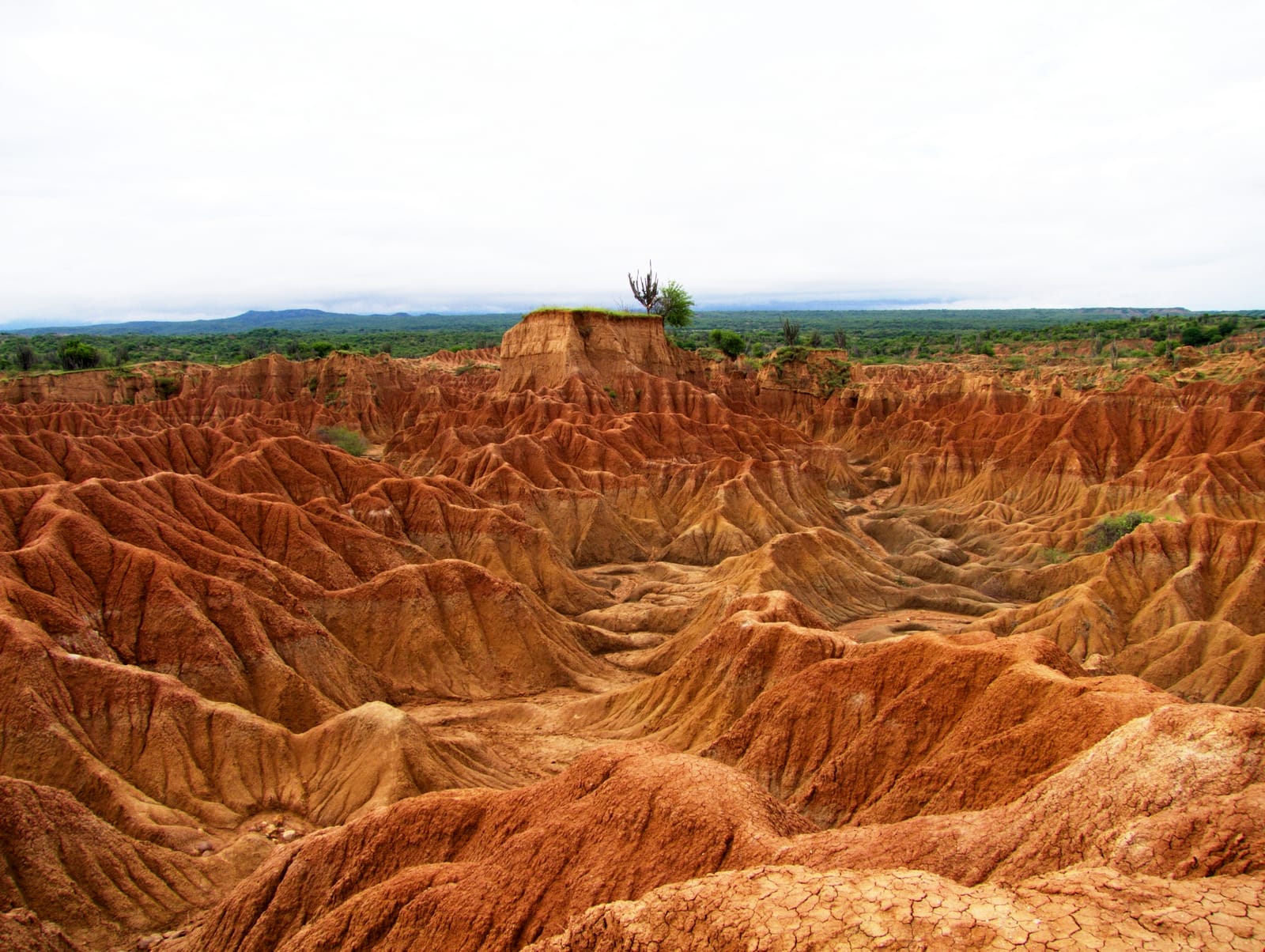
In July 2026, while Europe was making headlines for record-breaking temperatures and devastating forest fires, I found myself freezing in a remote cabaña at 4,000 metres in the mountains of Boyacá, Colombia. I was surrounded by the páramo, a fragile ecosystem native to this corner of the continent, where I was watching a very different climate story unfolding.
In early July, heavy downpours generated by El Niño hit the departments of Boyacá, Arauca and Casanare affecting over 24 municipalities, with over 17,000 families reporting damage (RCN, 2026). July is supposed to be the short dry season in Colombia without any rainfall. Nevertheless, heavy downpours triggered floods and landslides that damaged roads, bridges, and water infrastructure. The destruction was considerable but the speed with which people responded with unity, solidarity, and community resilience deeply impressed me.
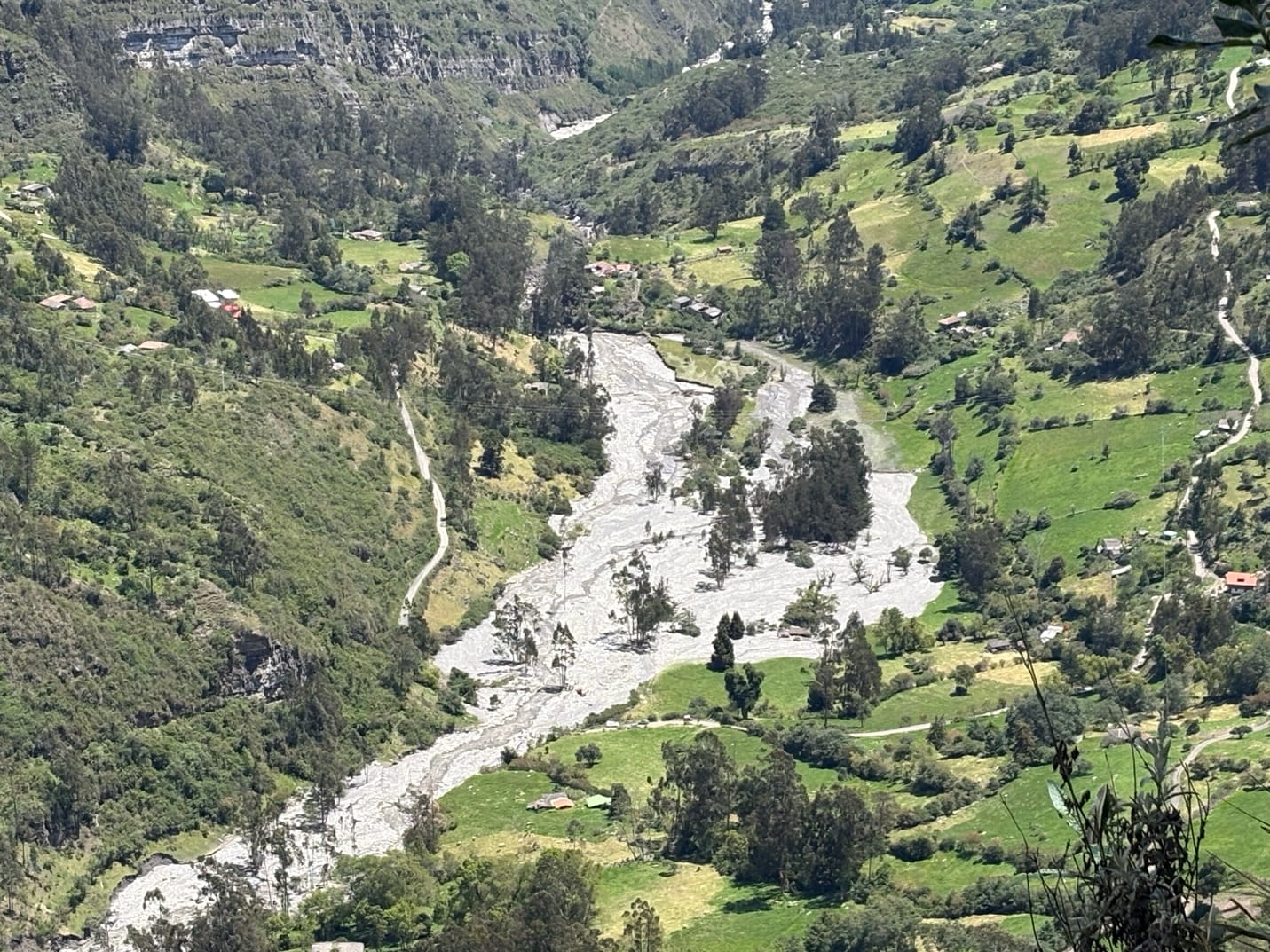
Figure 1: San Pablín river: Destruction in the valley following the heavy downpours near Güicán, Boyacá, Colombia (Photo credit: Sandor Madar)
I walked with my local host through the surrounding farms. At each farm, we checked on people, delivering medications and supplies. People discussed what would be needed in the weeks ahead to help to clear the damage and reconstruct houses, bridges, and access roads. One farmer knew where machinery could be borrowed, another was arranging transportation, others were already talking about how communities separated by collapsed bridges could remain connected. Surprisingly, people mostly said that they did not need much from the authorities, only some sand and cement. The rest could be managed locally because they have the manpower, the know-how, and the will.
By the time the authorities mobilised resources, local communities had already found ways to cope. Residents organised shuttle services on both side of the collapsed bridges to transport people, food, and supplies. One farmer allowed people to pass over his grazing land to an improvised footbridge. The community reactions emerged organically thanks to the interpersonal ties that exist between the people. Their resilience manifested in these small gestures from one to another.
At the same time, another climate emergency was unfolding thousands of kilometres away. Across Western, Central, and Southern Europe, temperatures climbed above 40°C. The severe heatwave led to major public-health challenges, transport disruption, infrastructure stress, drought, agricultural losses, spiking energydemand, and rapidly spreading wildfires. (see figure 2). June 2026 was the hottest month ever recorded in Western Europe (Copernicus Climate Change Service, 2026).
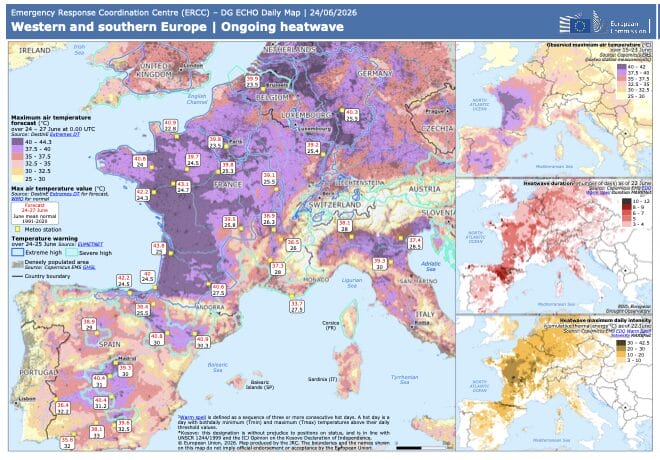
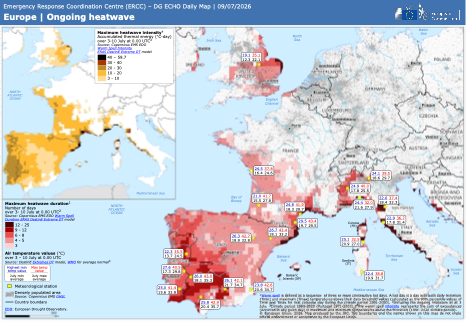
Figure 2: Western and Southern Europe, ongoing heatwave 24/06/2026 (left side) and 09/07/2026 (right side) – Emergency Response Coordination Centre (ERCC)-DG ECHO Daily Map, European Commission.
Europe is the fastest-warming continent on Earth with temperatures increasing at roughly twice the global average (WHO, 2026a). Heatwaves are becoming more frequent, lasting longer and reaching higher temperatures. The three warmest years on record occurred since 2020.
This begs the question of how European societies will adapt to a climate with increasingly frequent events. Hospitals reported surges in admissions related to heat exhaustion, dehydration, respiratory complications and cardiovascular emergencies. Nor was this an isolated event; the summers of 2022, 2023, and 2024 were associated with more than 181,000 heat-related deaths across Europe (Janoš, T., Quijal-Zamorano, M., Shartova, N. et al., 2025). Preliminary estimates suggest that more than 18,000 excess deaths might already have occurred as a result of the early summer 2026 heatwave (See figure 3, EuroMOMO, 2026).
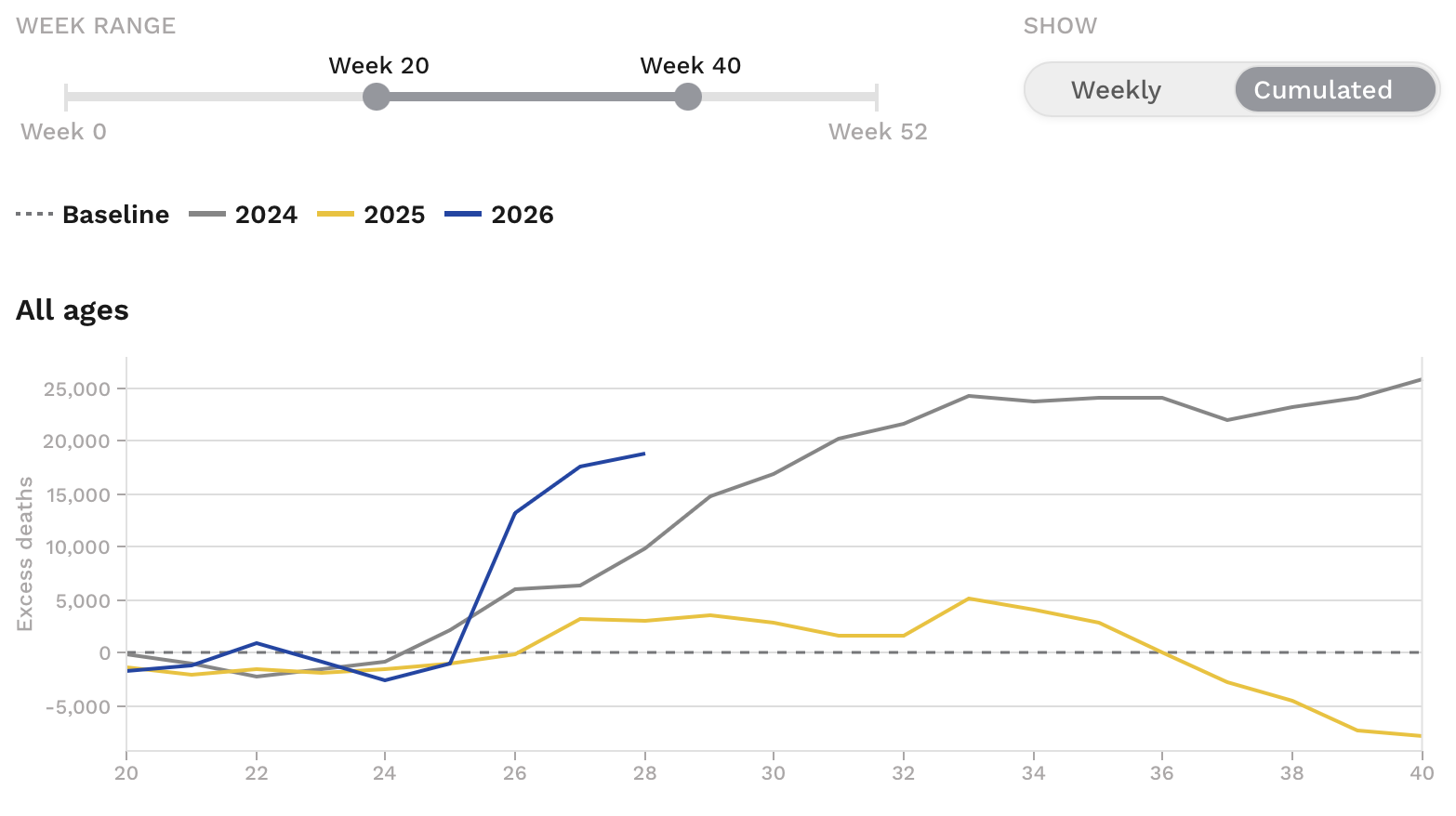
Figure 3: EuroMOMO data on excess death in Europe between May and September of 2024-2026 from 27 participating countries.
Infrastructure also showed signs of stress. Railway operators imposed speed restrictions, electricity demand surged as households, hospitals and businesses relied on cooling systems, while prolonged drought placed additional pressure on water resources and energy production (DW, 2026). Across southern Europe, the combination of extreme heat, dry vegetation and strong winds also contributed to a series of wildfires. By the end of the month thousands of square kilometres were burning across the EU (EFFIS, 2026) and the fires in Spain and France alone forced the evacuations of hundreds of thousands of people (BBC, 2026).
Vulnerability to extreme heat is highly uneven. The most affected groups are those who are socially isolated and lacking social protection. Elderly individuals living alone, people with chronic illnesses, low-income households unable to adequately cool their homes, outdoor workers and socially isolated residents face disproportionate risks (WHO, 2026b). The geography of vulnerability also differs between urban and rural areas. In cities, dense concentrations of concrete, asphalt, and limited vegetation amplify temperatures and increase health risks with the urban heat island effect increasing temperatures by up to 4°C compared to rural areas (WMO, 2026 ; Copernicus Climate Change Service, 2026). Rural areas, meanwhile, face drought, crop stress, water shortages, and wildfire exposure (JRC, 2026).
The heatwave has exposed persistent vulnerabilities across Europe. This is despite decades of planning and investment, particularly in heat preparedness, urban design, critical infrastructure protection, wildfire management, and protection of vulnerable populations. Buildings and critical infrastructure were not built for these conditions (Eurovent, 2026). Adaptation is not a one-off investment but an ongoing process of adjusting institutions, infrastructure and social systems to changing conditions. The persistence of high mortality during heatwaves suggests that adaptation remains uneven and incomplete.
In Colombia, extreme weather left a trail of visible destruction. But despite the damage, the social fabric of the communities stayed remarkably resilient with communities working together to overcome the challenges. Bycontrast, in Europe, the heatwave exposed a different kind of fragility. Most of the continent’s physical infrastructure remained operational, and emergency systems were functional. But the greatest risks emerged where social vulnerability intersects with exposure to the extreme temperature: an elderly person living alone in an overheated apartment, a worker exposed to extreme temperatures without adequate protection, or a neighbourhood lacking access to green space.
The case of community resilience in Colombia does not offer a immediately transferable blueprint for Europe, nor does it suggest that communities in the Andes have somehow solved the challenges posed by climate change. Roads, bridges, and water systems require substantial investment, time, and support to rebuild. Europe’s response to extreme heat depends on sophisticated public institutions, healthcare systems, emergency management capacities, and long-term adaptation planning. However, I would argue that Europeans became too dependant on these institutions and systems while forgetting their most fundamental layer of resilience: their communities.
Climate change will continue to test societies across the world. The floods in Colombia and the heatwaves in Europe underline the fact that resilience depends on the strength of our social fabric and on the relationships that connect people. The strength of our infrastructure and the billions that we invest into adaptation are only complimentary to that.
As Europe confronts a future of more frequent and more intense heatwaves, one of the most important adaptation questions might be how to strengthen the social connections that help people remain resilient, withstand, and recover from climate shocks when they occur. The best form of resilience is something that money cannot buy : human connection and community solidarity.
To leave my European friends with a provocative question: Have you checked on your neighbours during this last heatwave?